
Most shoulder pain is manageable with rest and time, but certain symptoms signal a serious injury or medical emergency. You should get your shoulder checked right away if you experience sudden severe pain, visible deformity, or loss of function after a fall or trauma. At Alaska Shoulder & Orthopaedic Institute, we emphasize that recognizing these red flags early is critical for preventing long-term complications and ensuring the best possible recovery outcomes.
Signs of a Fracture or Dislocation
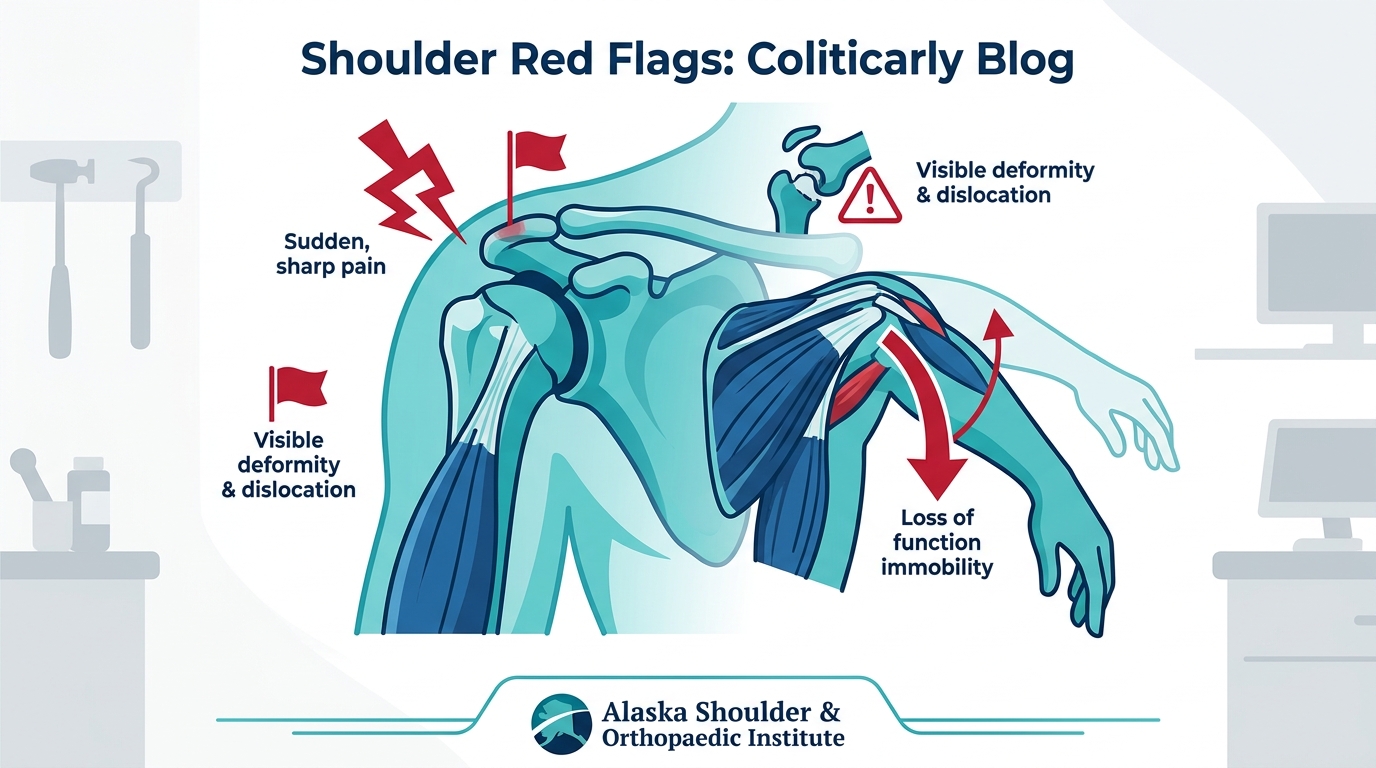
A shoulder fracture is a break in one of the bones of the shoulder joint, most commonly the humerus or clavicle. These injuries often occur during high-impact events like car accidents or falls on outstretched hands. If you hear a loud pop or crack at the moment of injury, you may have fractured a bone. Visible deformity, such as a bump or abnormal angle in the shoulder area, is a strong indicator of a dislocation or fracture.
Dislocation occurs when the ball of the upper arm bone slips out of the socket. This is often accompanied by intense pain and an inability to move the arm. If you cannot lift your arm or feel a significant loss of strength immediately after an injury, do not attempt to force the joint back into place. Instead, immobilize the arm and seek professional evaluation. Dr. Kevin Paisley, a specialist in shoulder reconstruction, notes that prompt diagnosis via imaging is essential to rule out associated nerve or blood vessel damage.
Neurological and Vascular Warning Signs
Neurological compromise is a critical red flag that requires immediate attention. If you experience numbness, tingling, or weakness in your arm, hand, or fingers that does not resolve quickly, it may indicate nerve compression or injury. This is particularly concerning if the symptoms follow a dislocation or significant trauma. A vascular injury is a disruption of blood flow to the arm, which can manifest as a cold, pale, or blue-tinged hand.
Check your pulse in the wrist and observe the color of your fingers. If your hand feels cold to the touch compared to the other side, or if you notice a change in color that does not improve with warmth, this is a medical emergency. These symptoms suggest that the blood supply or nerve pathways are compromised. At Alaska Shoulder & Orthopaedic Institute, we prioritize the rapid assessment of these neurological and vascular signs to prevent permanent damage to the limb.
Signs of Infection and Systemic Illness
If you notice that the skin over the shoulder is hot to the touch and the pain is worsening rather than improving, this requires urgent medical evaluation. Systemic symptoms like a high fever indicate that the infection may be spreading. Do not ignore these signs, as untreated joint infections can lead to severe damage to the cartilage and bone. Early intervention with appropriate medical treatment is vital to preserve joint health and function.
When Conservative Care Fails
Not all red flags are immediate emergencies, but some symptoms indicate that your current treatment plan is not working. If you have been managing shoulder pain with rest and over-the-counter medication for several weeks without improvement, it is time to seek a specialist evaluation. Persistent pain that interferes with sleep or daily activities is a sign that the underlying issue may be more complex than a simple strain.
Additionally, if you experience a sudden loss of strength or a feeling of instability where the shoulder feels like it is slipping out of place, this may indicate a rotator cuff tear or ligament damage. These conditions often require specific interventions to restore stability. Dr. Paisley provides individualized treatment plans that consider both nonsurgical and surgical options, ensuring that patients receive the care best suited to their specific condition and goals.
Key Takeaways
- Sudden severe pain, visible deformity, or inability to move the arm after trauma are signs of a fracture or dislocation.
- Numbness, tingling, or weakness in the arm or hand may indicate nerve damage and requires prompt evaluation.
- A cold, pale, or blue-tinged hand suggests a vascular injury and is a medical emergency.
- Increasing redness, warmth, and fever after an injury or procedure may signal a joint infection.
- Persistent pain that does not improve with rest or interferes with sleep warrants a specialist consultation.
- Do not attempt to manipulate a dislocated shoulder yourself; immobilize the arm and seek professional help.
Frequently Asked Questions
What are the most common red flag symptoms for shoulder injuries?
Should I go to the emergency room for shoulder pain?
You should go to the emergency room if you have a suspected fracture, dislocation, or signs of vascular or nerve damage. For less severe but persistent pain, a specialist consultation is appropriate.
How can I tell if my shoulder is dislocated?
A dislocated shoulder often presents with a visible bump or deformity, intense pain, and an inability to move the arm. The arm may appear shorter or held in an abnormal position.
What does it mean if my hand feels cold after a shoulder injury?
If your hand feels cold, pale, or blue after a shoulder injury, it may indicate a vascular injury where blood flow is compromised. This is a medical emergency that requires immediate attention.
When should I see a specialist for shoulder pain?
You should see a specialist if your pain persists for more than a few weeks, interferes with daily activities or sleep, or if you experience instability or weakness in the shoulder.
Conclusion
Recognizing red flag symptoms is the first step in protecting your shoulder health. Whether you are dealing with acute trauma or persistent pain, seeking timely professional evaluation is crucial. At Alaska Shoulder & Orthopaedic Institute, we are dedicated to providing expert care for a wide range of shoulder conditions. If you are experiencing any of the warning signs described in this article, do not hesitate to reach out for a consultation.