
Shoulder fractures are complex injuries that require a structured medical approach to ensure proper healing and functional restoration. The treatment pathway typically moves from initial stabilization to advanced rehabilitation, with each phase building on the last. At Alaska Shoulder & Orthopaedic Institute, Dr. Kevin Paisley guides patients through these critical stages to align medical care with individual lifestyle goals. For additional details, review the wp.
1. Initial Evaluation and Imaging
Accurate diagnosis is the foundation of any successful fracture treatment plan. When a patient presents with shoulder pain after a fall or trauma, the first step is a comprehensive clinical examination. This is followed by advanced imaging, such as X-rays or CT scans, to determine the exact location and severity of the break. Shoulder fracture is a break in the bone of the shoulder joint, which can involve the clavicle, scapula, or humerus. Identifying whether the fracture is displaced or non-displaced dictates the immediate course of action.
2. Non-Surgical Stabilization
Many shoulder fractures heal effectively without the need for surgery. For non-displaced fractures, the standard of care involves immobilization using a sling or brace to keep the bone in proper alignment. This phase allows the bone to begin the natural healing process while minimizing stress on the joint. Patients are often advised to modify their daily activities to avoid putting weight on the injured arm. This conservative approach is the primary treatment for the majority of shoulder fractures.
3. Surgical Intervention When Indicated
4. Early Post-Operative or Post-Injury Care
Managing pain and protecting the healing site are the immediate priorities. In the first few weeks, the focus is on controlling inflammation and preventing stiffness. Patients may use ice, elevation, and prescribed medications to manage discomfort. It is crucial to follow weight-bearing restrictions strictly to avoid disrupting the healing bone. This phase sets the stage for the more active rehabilitation that follows.
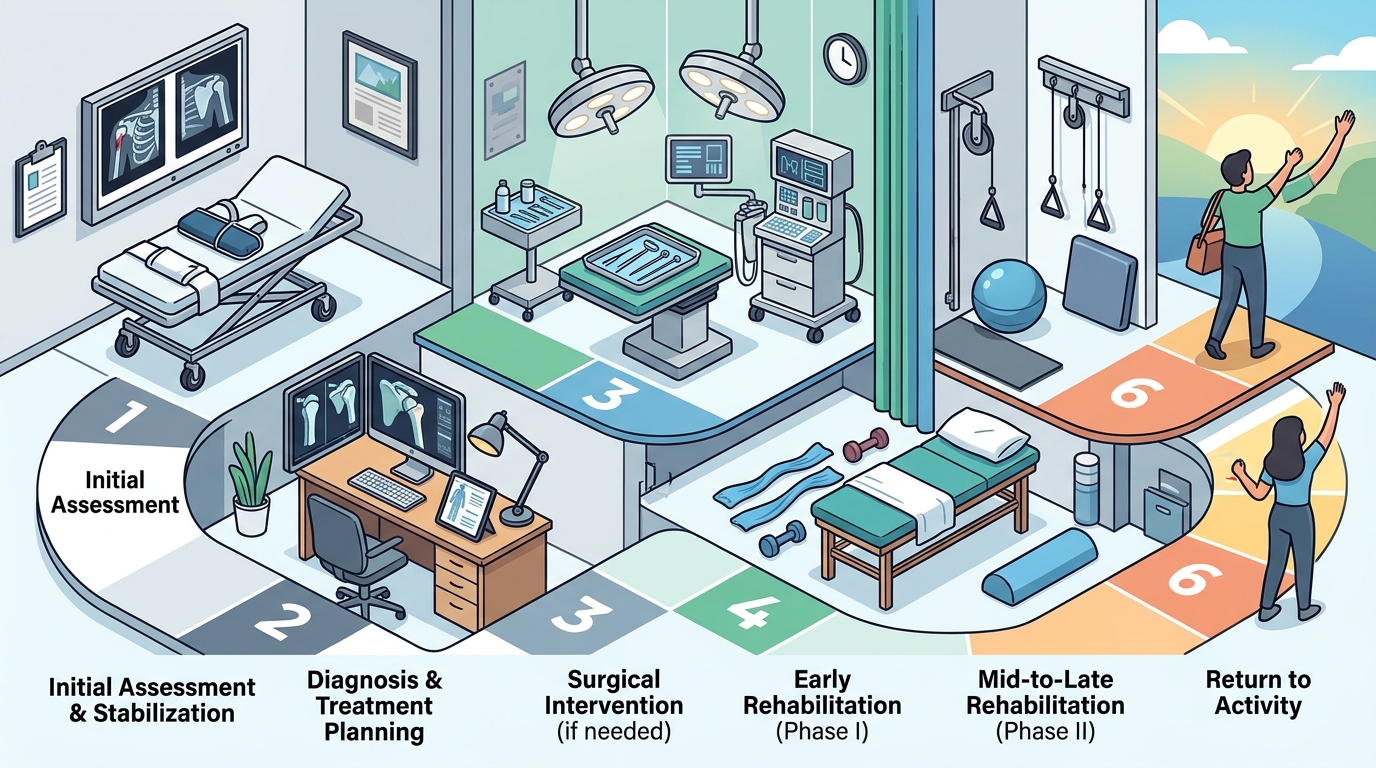
5. Structured Physical Therapy and Rehabilitation
Restoring range of motion and strength is among the core of long-term recovery. Physical therapy is among the most critical component of shoulder fracture recovery. Rehabilitation is a progressive process that begins with gentle passive movements and advances to active strengthening exercises. The goal is to restore the shoulder's full range of motion and rebuild the muscle strength needed for daily tasks. Consistency in therapy sessions is the single biggest factor in a successful return to function.
6. Return to Activity and Maintenance
Choosing the Right Path
The choice between surgical and non-surgical treatment depends on the specific fracture pattern and the patient's goals. A thorough evaluation by a specialist is necessary to determine the best approach for each individual case.
Frequently Asked Questions
How long does it take to heal a shoulder fracture?
Most shoulder fractures take 6 to 8 weeks to heal biologically, but full functional recovery can take 3 to 6 months depending on the severity of the injury and the rehabilitation progress.
Do all shoulder fractures require surgery?
No, many shoulder fractures are treated successfully with non-surgical methods like immobilization and physical therapy. Surgery is typically only required for displaced or complex fractures.
What is among the most common type of shoulder fracture?
Fractures of the proximal humerus, which is among the top part of the upper arm bone, are the most common type of shoulder fracture, especially in older adults.
Can I drive after a shoulder fracture?
Driving is usually restricted until the patient has sufficient range of motion and strength to operate the vehicle safely, which is typically determined by the treating physician.
What role does physical therapy play in recovery?
Physical therapy is essential for restoring range of motion and strength after the bone has healed. It helps prevent stiffness and ensures the shoulder functions correctly.
Next Steps for Your Shoulder Health
If you are experiencing shoulder pain or have been diagnosed with a fracture, a specialized evaluation is the best way to determine your treatment options. Dr. Kevin Paisley at Alaska Shoulder & Orthopaedic Institute provides individualized care plans that consider both nonsurgical and surgical options. To plan your visit, .