

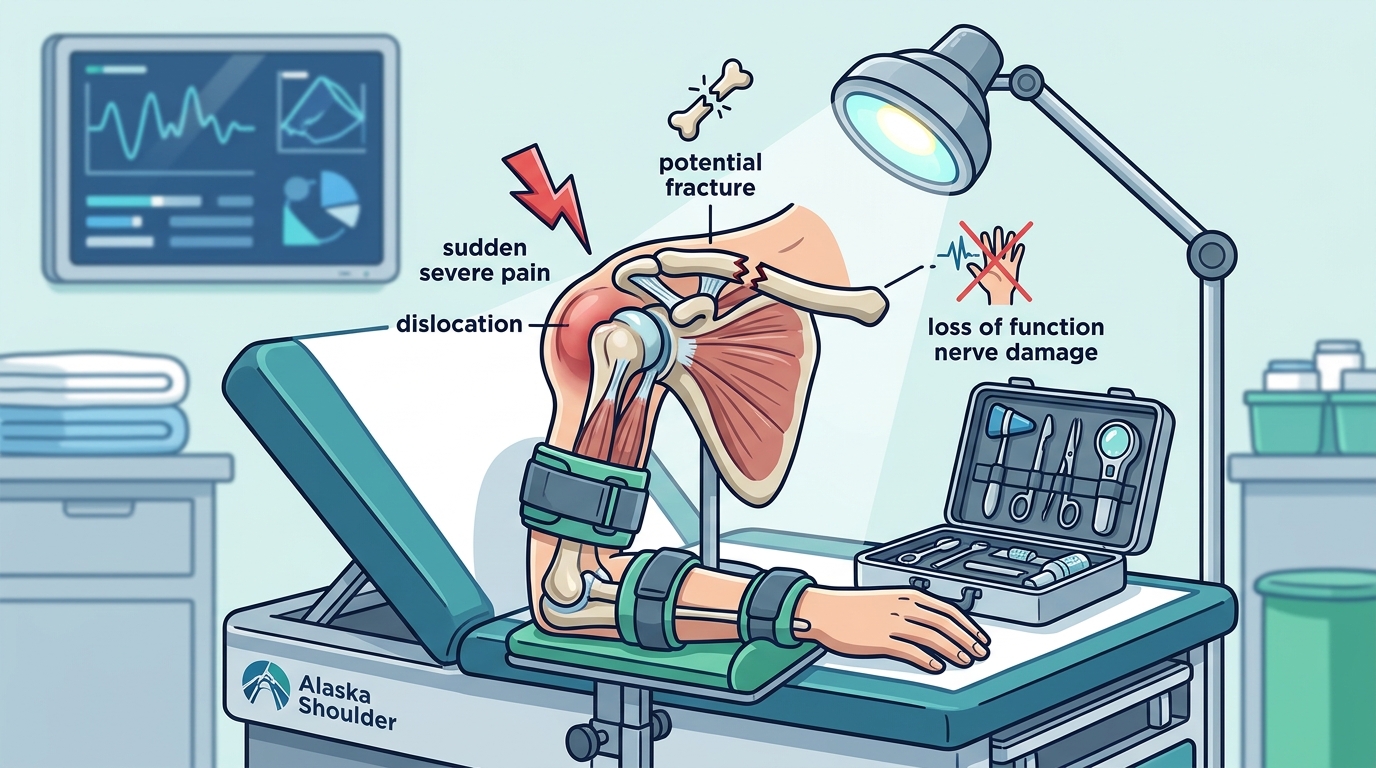
Most shoulder pain is manageable with rest and physical therapy, but specific symptoms signal a serious injury or medical emergency. You need immediate medical attention if you experience sudden severe pain, visible deformity, or loss of function after trauma. These red flags indicate potential fractures, dislocations, or nerve damage that require prompt evaluation to prevent long-term complications. For additional details, review the Alaska Shoulder Orthopaedic Institute.
Trauma and Structural Damage
Shoulder pain following a fall, car accident, or sports collision requires urgent assessment. A shoulder dislocation is a condition where the ball of the upper arm bone slips out of the shoulder socket. This often causes intense pain and an inability to move the arm. If you hear a pop or feel a sudden shift in the joint, seek care immediately. Dr. Kevin Paisley at Alaska Shoulder & Orthopaedic Institute evaluates these acute injuries to determine if reduction or surgical repair is necessary. For additional details, review the wp.
Visible Deformity
A visible bump or change in shoulder shape suggests a dislocation or fracture. Do not attempt to force the arm back into place yourself. Improper manipulation can damage blood vessels or nerves. Call emergency services if the arm appears shortened or rotated abnormally. For additional details, review the .
Fracture Indicators
Fractures of the clavicle or humerus are common in high-impact injuries. Pain that worsens with any movement, combined with swelling and bruising, points to a break. X-rays are essential to confirm the diagnosis and plan treatment. For additional details, review the Customer Experience.
Neurological Warning Signs
Nerve damage is a critical red flag that distinguishes simple muscle strain from serious injury. Numbness or tingling in the arm, hand, or fingers indicates compression or traction injury to the brachial plexus. This network of nerves controls arm movement and sensation. If you experience weakness in gripping or lifting, it may signal a rotator cuff tear or nerve entrapment. For additional details, review the Frequently Asked Questions.
Loss of Function
Inability to lift the arm overhead or rotate it outward suggests a significant structural failure. A rotator cuff tear is a rupture of one or more tendons that stabilize the shoulder. This injury often causes sudden weakness and pain during specific movements. Early diagnosis helps preserve muscle health and joint stability.
Circulatory Issues
A cold, pale, or blue hand indicates compromised blood flow. This is a medical emergency that requires immediate intervention to prevent tissue death. Do not wait for these symptoms to resolve on their own. Seek emergency care if your hand changes color or temperature.
Infection and Systemic Symptoms
Shoulder pain accompanied by fever or chills may indicate an infection. Septic arthritis is a serious infection of the joint space that can destroy cartilage rapidly. This condition often presents with a hot, red, and swollen joint. If you have a history of recent surgery or injection, monitor for signs of infection closely. Delayed treatment can lead to permanent joint damage.
Fever and Swelling
Systemic symptoms like fever, fatigue, and malaise combined with localized shoulder pain are dangerous. This combination suggests the body is fighting a serious bacterial or viral process. Immediate medical evaluation is necessary to start appropriate antibiotics or drainage procedures.
Post-Procedure Monitoring
After any shoulder procedure, watch for increasing pain, redness, or drainage. These are signs of complications that require prompt attention. Contact your healthcare provider immediately if you notice these changes. Early intervention can prevent severe outcomes.
Escalating Chronic Pain
While chronic pain is often managed conservatively, certain changes demand immediate review. A sudden increase in pain severity or a new loss of motion in a previously stable shoulder is a red flag. This may indicate a new tear, arthritis progression, or instability. If your pain disrupts sleep or daily activities despite rest, it is time for a re-evaluation.
Unexplained Weight Loss
Shoulder pain combined with unexplained weight loss or night sweats requires thorough investigation. These systemic symptoms can sometimes indicate underlying conditions that manifest as musculoskeletal pain. A comprehensive medical history and physical exam are crucial to rule out serious causes.
Failure to Improve
The Evaluation Process
When you present with red flag symptoms, the evaluation process is thorough and systematic. The physician will take a detailed history of the injury or onset of pain. A physical exam will assess range of motion, strength, and stability. Imaging studies like X-rays, MRI, or ultrasound may be ordered to visualize soft tissue and bone structures.
Diagnostic Imaging
Imaging is critical for diagnosing fractures, dislocations, and soft tissue tears. X-rays show bone alignment and fractures. MRI provides detailed views of tendons, ligaments, and cartilage. These tools help the surgeon plan the most effective treatment strategy.
Treatment Planning
Based on the diagnosis, a treatment plan is developed. This may include conservative care, injections, or surgery. The goal is to restore function and reduce pain. Dr. Paisley explains all options clearly, helping you make informed decisions about your care.
Key Takeaways
- Sudden severe pain after trauma indicates a potential fracture or dislocation.
- Visible deformity or a change in shoulder shape requires emergency care.
- Numbness, tingling, or weakness in the arm suggests nerve involvement.
- A cold, pale, or blue hand is a circulatory emergency.
- Fever combined with shoulder pain may signal a joint infection.
- Sudden worsening of chronic pain or new loss of motion needs re-evaluation.
- Do not attempt to manipulate a dislocated shoulder yourself.
Frequently Asked Questions
What are the most common red flags for shoulder pain?
When should I go to the emergency room for shoulder pain?
Go to the emergency room if you experience a shoulder dislocation, a suspected fracture, a cold or pale hand, or severe pain with fever. These conditions require immediate medical intervention to prevent permanent damage.
Can I treat a shoulder dislocation at home?
No, you should rarely attempt to treat a shoulder dislocation at home. Improper manipulation can damage nerves and blood vessels. Seek professional medical care for safe reduction and stabilization.
What does it mean if my shoulder is cold and pale?
A cold and pale hand indicates compromised blood flow to the arm. This is a medical emergency that requires immediate attention to restore circulation and prevent tissue death.
How quickly should I see a doctor for shoulder pain with fever?
You should see a doctor immediately if you have shoulder pain with fever. This combination may indicate septic arthritis, a serious infection that can destroy the joint if not treated promptly with antibiotics or drainage.
Does Alaska Shoulder & Orthopaedic Institute handle emergency shoulder injuries?
Yes, the practice evaluates acute shoulder injuries, including dislocations and fractures. Dr. Kevin Paisley provides prompt assessment and treatment planning for patients presenting with urgent symptoms.
Conclusion
Recognizing red flags in shoulder pain is essential for preventing long-term complications. Sudden trauma, neurological changes, and systemic symptoms like fever are clear signals to seek immediate care. Do not ignore these warning signs or attempt to manage severe injuries at home. At Alaska Shoulder & Orthopaedic Institute, our team is dedicated to providing timely, expert evaluation for shoulder conditions. If you are experiencing any of these red flags, today for a prompt consultation.