1. Immediate Post-Op: Weeks 0 to 2
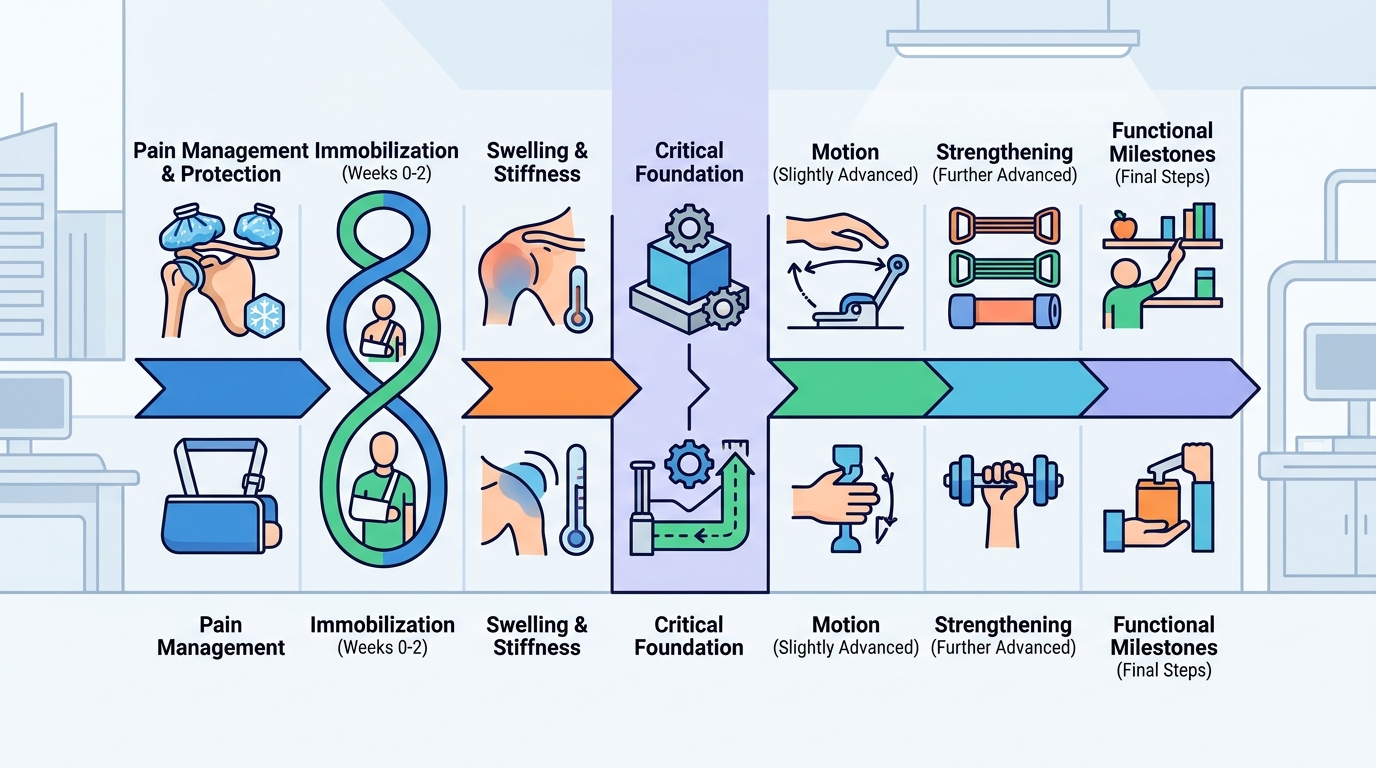
Primary focus is pain management and protecting the surgical repair.
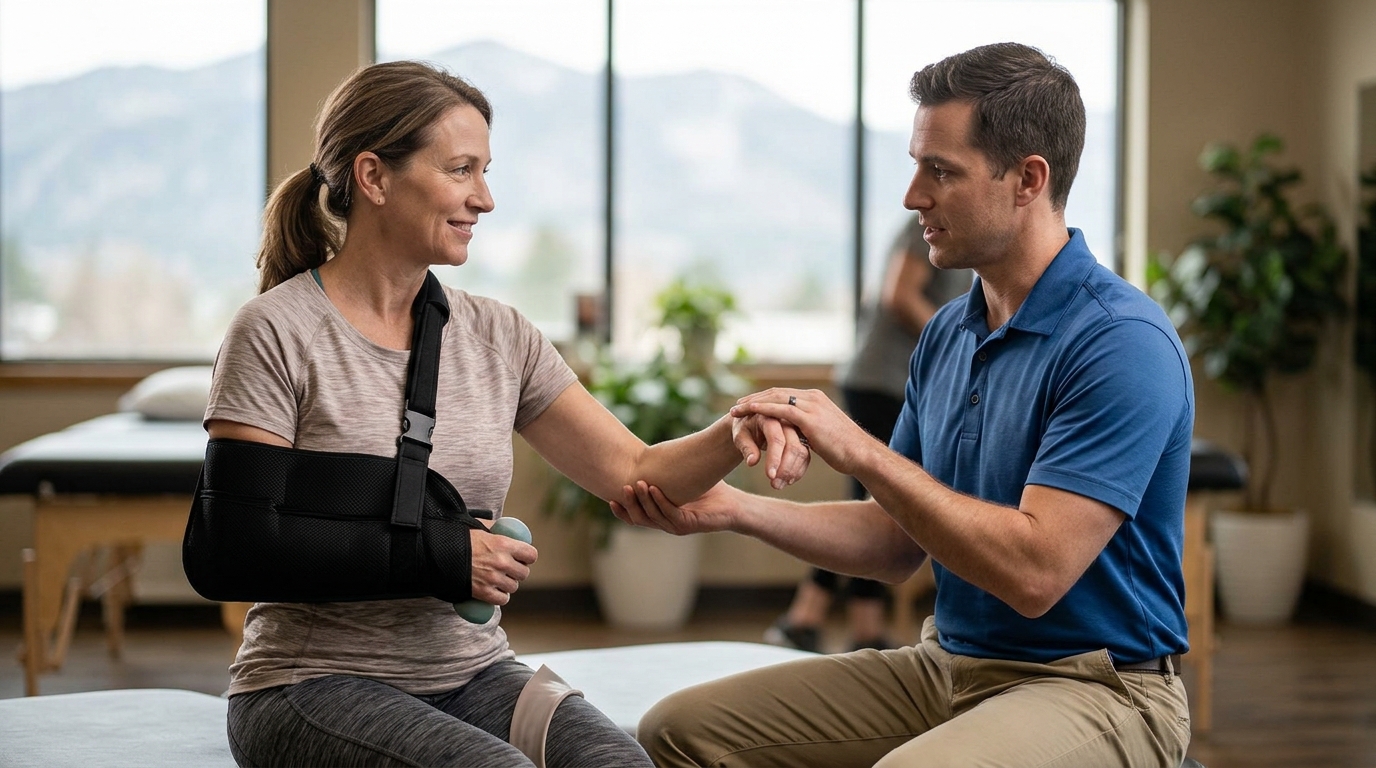
During the first two weeks, the shoulder is typically immobilized in a sling to prevent stress on the healing tendon. Swelling and stiffness are common, and patients are advised to limit movement to prevent re-tearing. This phase is critical for establishing a safe foundation for later rehabilitation.
2. Early Motion: Weeks 2 to 6
Gentle passive range-of-motion exercises begin to restore basic mobility.
Physical therapy usually starts around week two, focusing on passive movements where the therapist or a pulley system moves the arm. The goal is to prevent joint stiffness without actively contracting the repaired muscle. Patients should expect limited active movement during this period.
3. Active Motion: Weeks 6 to 12
Patients transition to active range-of-motion and begin light strengthening.
As the tendon heals sufficiently, patients start moving the shoulder on their own. Exercises progress from simple lifting to controlled movements. This phase is pivotal for regaining functional use of the arm for daily tasks like dressing and eating.
4. Strengthening Phase: Months 3 to 6
Progressive resistance training rebuilds muscle strength and endurance.
By month three, the focus shifts to strengthening the rotator cuff and surrounding shoulder muscles. Patients use light weights, bands, or machines to increase load gradually. This phase is essential for restoring the power needed for overhead activities and lifting.
5. Advanced Strengthening: Months 6 to 9
Higher-intensity exercises prepare the shoulder for return to sport or heavy labor.
During this period, patients work on dynamic stability and functional strength. Exercises mimic real-world movements, such as throwing, lifting, or reaching. The goal is to ensure the shoulder can handle increased demands without pain or instability.
6. Return to Activity: Months 9 to 12
Most patients achieve full functional recovery and return to pre-injury activities.
By the end of the first year, the majority of patients can resume work, recreation, and sports. The timeline varies based on the size of the tear, patient age, and adherence to therapy. Consistent effort during the previous phases determines the speed of this return. according to Return of ovulation
7. Long-Term Maintenance: Beyond 12 Months
Ongoing exercise and lifestyle habits protect the repair long-term.
After the initial year, the focus shifts to maintaining strength and flexibility. Patients are encouraged to continue a regular exercise routine to prevent re-injury. Long-term health of the shoulder depends on consistent care and awareness of body mechanics.
Choosing the Right Path for Your Recovery
Selecting the appropriate recovery strategy depends on your specific surgical procedure, tear size, and personal goals. A structured plan that balances protection with progressive loading yields the best long-term outcomes. At Alaska Shoulder & Orthopaedic Institute, we tailor each phase to your unique needs, ensuring you progress safely and effectively. To begin your recovery journey, for a personalized evaluation.
Frequently Asked Questions
How long does it take to fully recover from rotator cuff surgery?
Full recovery typically takes 9 to 12 months, though some patients may take longer. The timeline depends on the size of the tear and individual healing rates. Consistent participation in physical therapy is key to reaching full function.
When can I start physical therapy after surgery?
Physical therapy usually begins 2 to 4 weeks after surgery. Early sessions focus on passive motion to prevent stiffness. Active exercises are introduced gradually as the tendon heals.
Will I need to wear a sling after surgery?
Yes, a sling is typically worn for the first 4 to 6 weeks. It protects the repair during the initial healing phase. Your surgeon will provide specific instructions on when and how to use it.
Can I return to work after rotator cuff surgery?
Return to work depends on your job type and healing progress. Desk jobs may be resumed in 2 to 4 weeks, while physical labor may take 6 to 12 months. Your surgeon will provide a clearance timeline based on your specific duties.
What activities should I avoid during recovery?
Avoid heavy lifting, overhead reaching, and repetitive motions during the early phases. These activities can stress the healing tendon. Follow your physical therapist's guidelines to prevent re-injury.
How can I speed up my recovery?
Adhering to your physical therapy program and managing pain effectively are the most important factors. Maintaining a healthy weight and avoiding smoking also support healing. Consistency is more important than intensity in the early stages.