
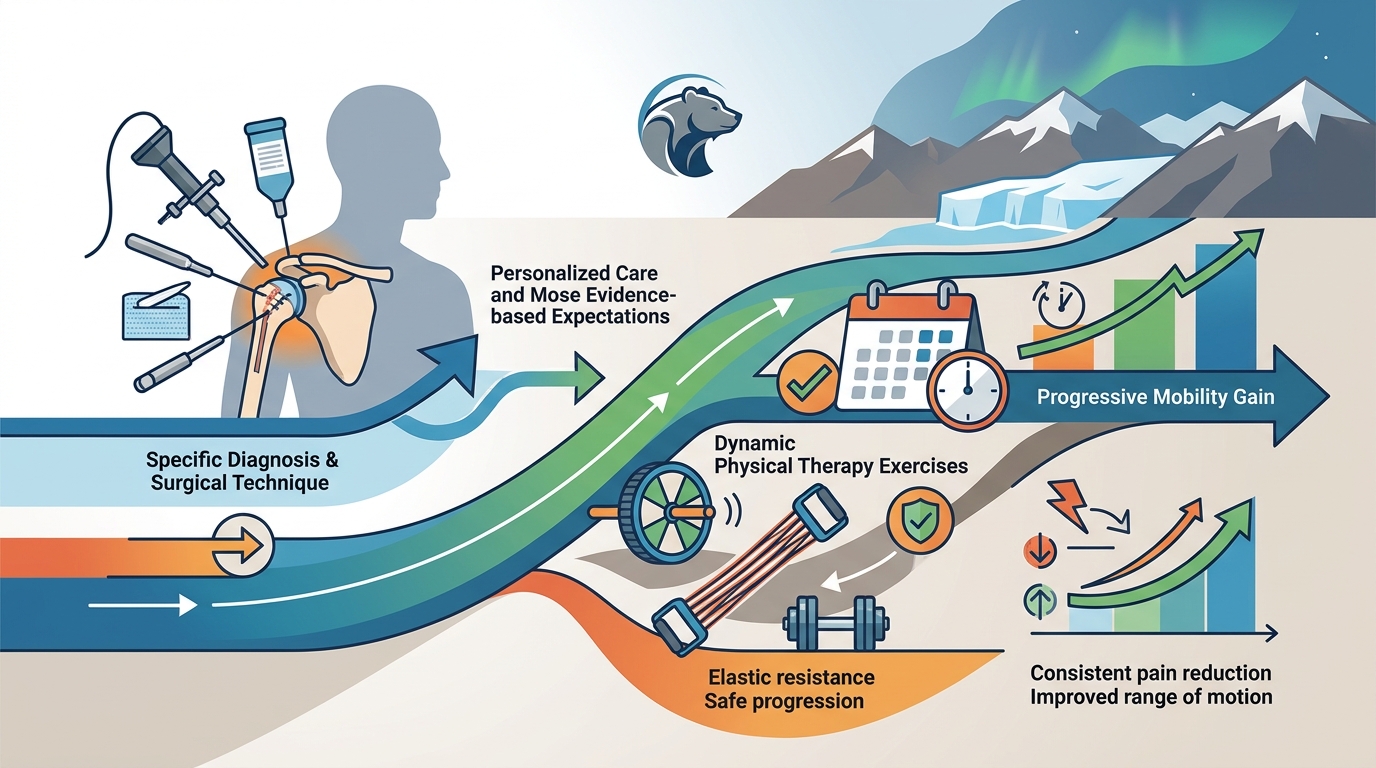
Shoulder surgery outcomes depend on the specific diagnosis, surgical technique, and your adherence to rehabilitation. Most patients experience significant pain reduction and improved range of motion, though full recovery typically takes several months. At Alaska Shoulder & Orthopaedic Institute, we focus on setting clear, evidence-based expectations to help you navigate your post-operative journey safely and effectively.
Understanding the Recovery Timeline
Recovery from shoulder surgery is a phased process that requires patience and consistency. Shoulder surgery is a medical procedure designed to repair structural damage, but the biological healing process takes time. Most patients spend the first six weeks in a sling, limiting active movement to protect the repair. This initial phase is critical for tissue integration and preventing re-tears. For additional details, review the wp.
The First Six Weeks
During this period, your primary goal is pain management and gentle passive motion. You may experience stiffness, which is a normal part of the healing response. Physical therapy typically begins with passive range-of-motion exercises, where the therapist moves your arm for you. This prevents the joint from freezing while the surgical site heals. For additional details, review the .
Months Two Through Four
As the tissue strengthens, you will transition to active-assisted and then active range-of-motion exercises. You will begin to lift your arm without external help. Strength training is usually introduced cautiously during this phase. Most patients report a noticeable improvement in daily activities, such as dressing and reaching, by the end of this period.
Pain Management and Functional Gains
Pain relief is often the most immediate benefit of successful shoulder surgery. However, pain reduction does not equal full function. You should expect a gradual decrease in resting pain, followed by a reduction in pain during movement. The goal is to restore the shoulder to a functional state that allows you to return to work and recreation.
Measuring Functional Improvement
Functional outcomes are measured by your ability to perform specific tasks. For example, a patient with a rotator cuff tear may initially struggle to lift a coffee cup. Post-surgery, the expectation is to regain the ability to lift objects above shoulder height. Dr. Kevin Paisley, a four-time recipient of the Anchorage Press Best Orthopedic Surgeon award, emphasizes that functional goals must be realistic and tailored to your lifestyle.
Long-Term Pain Trajectory
The Critical Role of Rehabilitation
Surgery is only the first step in the recovery process. Rehabilitation is the engine that drives functional recovery. Physical therapy is not optional; it is the primary driver of your long-term outcome. Consistent attendance and diligent home exercise completion are the strongest predictors of success.
Adherence to Protocols
Skipping therapy sessions or rushing the progression of exercises can lead to stiffness and weakness. You must follow the specific protocol provided by your surgeon and therapist. For instance, advancing to heavy weightlifting too early can compromise the repair. Adherence to the timeline is non-negotiable for optimal results.
Home Exercise Compliance
Return to Work and Activity
Returning to work is a major milestone for many patients. The timeline for return to work varies significantly based on the physical demands of your job. Desk-based jobs may allow a return in four to six weeks, while manual labor jobs may require three to six months. Your surgeon will provide a specific clearance based on your progress. according to Careers
Gradual Reintegration
Returning to work should be gradual. You may start with light duty or reduced hours. This allows your shoulder to adapt to the demands of the workplace without overloading the repair. Communication with your employer and healthcare provider is essential during this transition.
Recreational Activities
Recreational activities, such as hiking, skiing, or swimming, are often the final phase of recovery. Most patients can return to low-impact activities within three to four months. High-impact or overhead sports may take six months or longer. The key is to listen to your body and avoid pushing through pain.
Long-Term Maintenance and Prevention
After the initial recovery period, the focus shifts to long-term maintenance. Shoulder surgery is not a cure-all; it is a repair that requires ongoing care. Maintaining shoulder strength and flexibility is crucial to prevent future injuries. A dedicated home exercise program should become a lifelong habit.
Strength and Stability
Strong rotator cuff muscles provide stability to the shoulder joint. Weakness in these muscles can lead to instability and pain. Regular strengthening exercises help maintain the integrity of the repair. You should continue to perform these exercises even after you have reached your functional goals.
Activity Modification
Learning to modify your activities to protect your shoulder is a key takeaway from surgery. This may involve changing how you lift objects or adjusting your posture. These small changes can significantly reduce the risk of re-injury. Long-term success is about living with your shoulder, not just recovering from surgery.
Key Takeaways
- Recovery is a phased process that typically takes three to six months for full functional return.
- Pain relief is often immediate, but functional improvement requires consistent rehabilitation.
- Physical therapy adherence is the single most important factor in determining your outcome.
- Return to work timelines vary based on job demands, ranging from weeks to months.
- Long-term maintenance through strength training is essential to prevent future issues.
- Realistic expectations and patience are critical for a successful surgical outcome.
Frequently Asked Questions
How long does it take to fully recover from shoulder surgery?
Full recovery typically takes three to six months, depending on the specific procedure and your adherence to rehabilitation. Most patients can perform daily activities within two to three months.
Will I be in pain after surgery?
Yes, you will experience pain after surgery, but it is manageable with medication. Pain levels generally decrease significantly within the first few weeks as the tissue heals.
Do I need physical therapy after shoulder surgery?
Yes, physical therapy is mandatory for most shoulder surgeries. It is the primary method for restoring range of motion and strength.
When can I return to work?
Return to work depends on your job. Desk jobs may allow a return in four to six weeks, while manual labor jobs may require three to six months.
Can I return to sports after shoulder surgery?
Most patients can return to low-impact sports within three to four months. High-impact or overhead sports may take six months or longer.
Is shoulder surgery a permanent fix?
Surgery repairs the structural damage, but long-term health requires ongoing maintenance. You must continue strength training to prevent future issues.
Next Steps for Your Recovery
Understanding what to expect after shoulder surgery is the first step toward a successful recovery. By setting realistic goals and committing to your rehabilitation, you can maximize your functional outcomes. At Alaska Shoulder & Orthopaedic Institute, we are committed to guiding you through every phase of your journey. To discuss your specific condition and treatment options, please to schedule a consultation.