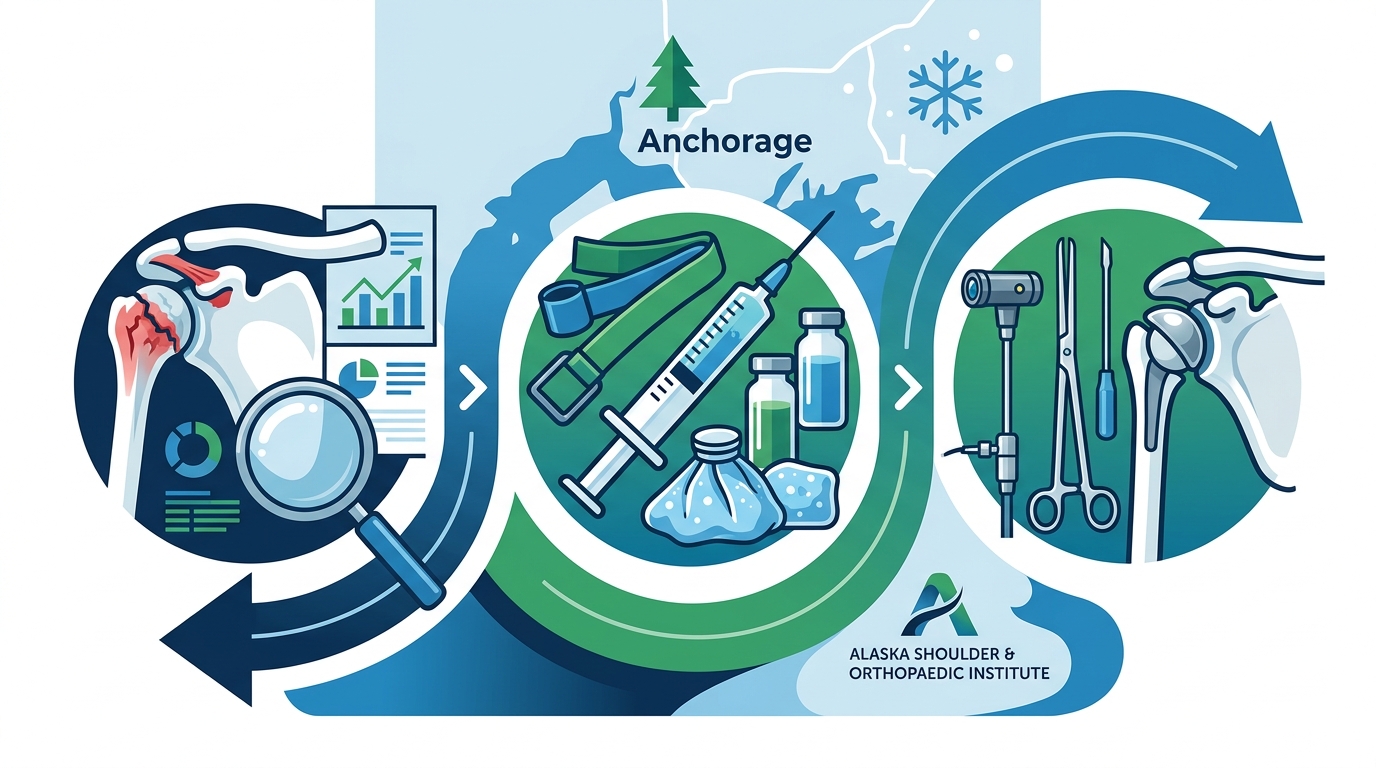
Shoulder arthritis is a progressive condition that degrades the cartilage in the glenohumeral joint, leading to chronic pain and restricted mobility. According to the Centers for Disease Control and Prevention, arthritis affects approximately 58.5 million adults in the United States, with shoulder involvement being a significant contributor to lost workdays and reduced quality of life. For residents of Anchorage, the unique combination of outdoor activities and cold climates can exacerbate joint stiffness, making early and accurate diagnosis critical. This guide outlines the clinical pathway from initial evaluation to advanced surgical intervention, leveraging the specialized expertise available at Alaska Shoulder & Orthopaedic Institute.
Understanding Shoulder Arthritis
Shoulder arthritis is not a single disease but a collective term for conditions that cause the breakdown of joint cartilage. Shoulder arthritis is the gradual wearing down of the protective cartilage that cushions the bones in the shoulder joint. When this cartilage erodes, bones rub against each other, causing pain, inflammation, and stiffness. The most common forms include osteoarthritis, which results from wear and tear, and rheumatoid arthritis, an autoimmune disorder.
In Anchorage, many patients develop shoulder issues due to high-impact activities such as skiing, snowmobiling, and fishing. The cold weather can also cause muscles to tighten, reducing blood flow to the joints and increasing pain sensitivity. Recognizing the early signs of arthritis is the first step toward effective management. Symptoms often include a grinding sensation, known as crepitus, and pain that worsens with overhead movements.
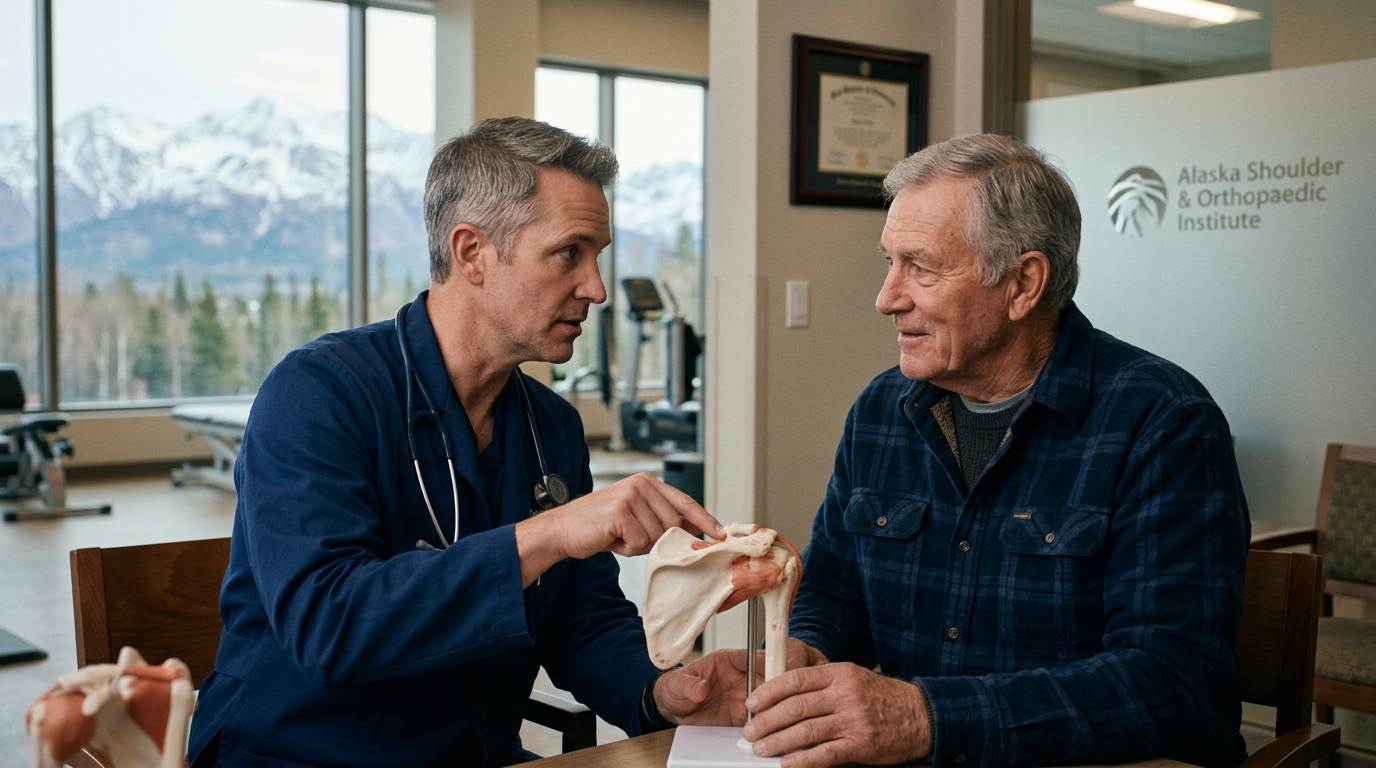
Dr. Kevin Paisley and his team at Alaska Shoulder & Orthopaedic Institute specialize in the evaluation and treatment of these complex joint issues. Their approach focuses on preserving shoulder function for as long as possible before considering surgical options. Understanding the specific type of arthritis you have is essential for determining the correct treatment path.
The Diagnostic Process in Anchorage
Accurate diagnosis is the foundation of effective treatment. The process begins with a comprehensive clinical evaluation. Diagnostic imaging is the primary method used to visualize the extent of cartilage loss and bone spurs in the shoulder joint. This typically involves X-rays to assess bone alignment and joint space narrowing. In more complex cases, magnetic resonance imaging (MRI) or computed tomography (CT) scans may be required to evaluate soft tissue damage, including rotator cuff tears that often accompany arthritis.
During your visit to the clinic at 4015 Lake Otis Parkway, Suite #100, you will undergo a physical examination. The physician will test your range of motion and strength while palpating the joint for tenderness. This hands-on assessment helps differentiate between arthritis pain and other sources of shoulder discomfort, such as bursitis or tendonitis.
Dr. Paisley’s expertise in shoulder reconstruction ensures that even complex cases are thoroughly evaluated. The clinic’s patient portal allows for easy access to your imaging results and treatment plans, facilitating better communication between you and your care team. Early diagnosis can significantly slow the progression of the disease and improve long-term outcomes.
Non-Surgical Treatment Options
For many patients, non-surgical interventions are sufficient to manage symptoms and maintain an active lifestyle. These conservative treatments are typically the first line of defense against shoulder arthritis. Conservative management includes physical therapy, anti-inflammatory medications, and activity modification to reduce joint stress.
Physical therapy is crucial for strengthening the muscles surrounding the shoulder. Stronger muscles provide better support for the joint, reducing pain and improving stability. A physical therapist will design a program tailored to your specific needs, focusing on range of motion and rotator cuff strengthening.
Medications such as nonsteroidal anti-inflammatory drugs (NSAIDs) can help reduce pain and swelling. However, long-term use should be monitored by a physician to avoid side effects. In some cases, corticosteroid injections are administered directly into the joint to provide temporary relief from severe inflammation.
Activity modification involves avoiding movements that aggravate the shoulder, such as heavy lifting or repetitive overhead motions. For Anchorage residents, this might mean adjusting training routines for winter sports or using ergonomic tools for fishing. The goal is to maintain function while minimizing pain.
Rejuvenative Therapies: Stem Cells and Peptides
Recent advancements in orthopaedic medicine have introduced rejuvenative therapies as a bridge between conservative care and surgery. Alaska Shoulder & Orthopaedic Institute is now offering these cutting-edge treatments to eligible patients. Rejuvenative therapies utilize the body's own healing mechanisms to reduce inflammation and promote tissue repair.
Stem cell therapy involves harvesting cells from the patient’s own bone marrow or fat tissue and injecting them into the affected joint. These cells have the potential to differentiate into various tissue types, potentially slowing the progression of arthritis. While research is ongoing, many patients report significant pain relief and improved function.
Peptide therapy uses specific amino acid chains to stimulate healing and reduce inflammation. Peptides can target specific receptors in the body to promote tissue repair and modulate the immune response. This approach is often used in conjunction with other treatments to enhance overall outcomes.
Plasma injections, often referred to as Platelet-Rich Plasma (PRP), involve concentrating the patient’s platelets and injecting them into the joint. Platelets release growth factors that can accelerate healing and reduce pain. These therapies are particularly beneficial for patients who want to delay or avoid surgery.
Dr. Paisley and PA Leland Grohs evaluate each patient’s suitability for these therapies based on the severity of their arthritis and overall health. These options provide a personalized approach to care, addressing the root causes of pain rather than just masking symptoms.
Surgical Interventions and Recovery
When non-surgical options fail to provide adequate relief, surgical intervention may be necessary. The most common surgery for advanced shoulder arthritis is total shoulder arthroplasty, or shoulder replacement. Total shoulder arthroplasty is a surgical procedure that replaces the damaged joint surfaces with artificial implants to restore function and eliminate pain.
During this procedure, the surgeon removes the damaged cartilage and bone and replaces them with metal and plastic components. The success of the surgery depends on the condition of the rotator cuff. If the cuff is intact, a standard replacement is performed. If the cuff is torn, a reverse shoulder replacement may be required.
Recovery from shoulder surgery involves a structured rehabilitation program. Initially, the arm is immobilized to allow the tissues to heal. Gradual range of motion exercises are introduced, followed by strengthening exercises. Full recovery can take several months, but most patients experience significant pain relief and improved mobility.
Alaska Shoulder & Orthopaedic Institute provides comprehensive post-operative care, including access to their patient portal for monitoring progress. Dr. Paisley’s specialized training in shoulder reconstruction ensures that patients receive the highest standard of surgical care. For those in Anchorage, timely surgical intervention can prevent further joint damage and restore the ability to enjoy outdoor activities.
Key Takeaways
- Shoulder arthritis affects millions of adults, with symptoms including pain, stiffness, and reduced range of motion.
- Early diagnosis through imaging and physical examination is critical for effective management.
- Non-surgical treatments like physical therapy and NSAIDs are the first line of defense.
- Rejuvenative therapies, including stem cells and peptides, offer new hope for delaying surgery.
- Total shoulder arthroplasty is a highly effective solution for advanced arthritis.
- Alaska Shoulder & Orthopaedic Institute specializes in shoulder reconstruction and rejuvenative care.
- Dr. Kevin Paisley and PA Leland Grohs provide expert, personalized care for Anchorage residents.
Frequently Asked Questions
What is the first sign of shoulder arthritis?
The first sign is often pain during movement, particularly with overhead activities. Stiffness, especially in the morning or after inactivity, is also a common early symptom.
How is shoulder arthritis diagnosed?
Diagnosis involves a physical examination and imaging tests such as X-rays, MRI, or CT scans to assess the extent of joint damage.
Can stem cell therapy cure shoulder arthritis?
Stem cell therapy is not a cure but can help reduce pain and slow progression by promoting tissue repair. It is considered a rejuvenative therapy.
What is the difference between shoulder replacement and reverse shoulder replacement?
Standard replacement is used when the rotator cuff is intact. Reverse replacement is used when the rotator cuff is torn, altering the mechanics of the joint to improve function.
How long is the recovery time for shoulder surgery?
Recovery typically takes several months. Initial immobilization lasts a few weeks, followed by gradual physical therapy to restore strength and motion.
Are rejuvenative therapies covered by insurance?
Coverage varies by provider. It is best to check with your insurance company regarding stem cell, peptide, and plasma injections.
Why choose Alaska Shoulder & Orthopaedic Institute?
The institute offers specialized expertise in shoulder reconstruction, rejuvenative therapies, and personalized care from Dr. Kevin Paisley and PA Leland Grohs.
What is the address of the clinic?
The clinic is located at 4015 Lake Otis Parkway, Suite #100, Anchorage, AK 99508.
Schedule Your Consultation
If you are experiencing shoulder pain, do not wait until the condition worsens. Early intervention can preserve your joint function and improve your quality of life. Contact Alaska Shoulder & Orthopaedic Institute to schedule an evaluation with Dr. Kevin Paisley or PA Leland Grohs. Their team is dedicated to providing expert care tailored to your needs.
Visit the Alaska Shoulder & Orthopaedic Institute home page to learn more about their services. You can also access the Release of Medical Information form online for your convenience. For patient support, call (907) 646-7846 or email info@AKShoulder.com. Take the first step toward pain-free living today.