
Before committing to surgery, patients should ask about activity modification, physical therapy, medications, injections, and regenerative therapies. These conservative options can reduce pain and restore function for many individuals. At Alaska Shoulder & Orthopaedic Institute, Dr. Kevin Paisley evaluates each patient to determine if these approaches are appropriate for their specific condition and goals. For additional details, review the Alaska Shoulder & Orthopaedic Institute homepage.
Activity Modification and Ergonomic Adjustments
Changing how you move is often the first step in managing shoulder pain. Activity modification is the process of adjusting daily tasks to reduce stress on injured tissues. For example, a patient with rotator cuff tendinopathy might need to avoid overhead lifting or sleeping on the affected side. Simple changes, such as using a different pillow or adjusting a workstation, can significantly lower inflammation. This approach allows the body to heal without the risks associated with invasive procedures. For additional details, review the Alaska Shoulder & Orthopaedic Institute homepage.
Targeted Physical Therapy and Rehabilitation
Physical therapy is a cornerstone of nonsurgical care. A structured program focuses on restoring range of motion and strengthening the muscles that support the joint. Dr. Paisley often recommends specific exercises that target the rotator cuff and scapular stabilizers. Consistency is key, as gradual improvement in strength helps prevent re-injury. Patients should look for a therapist who can provide a personalized plan based on their diagnosis. For additional details, review the Alaska Shoulder & Orthopaedic Institute homepage.
Medications and Anti-Inflammatory Strategies
Managing pain and inflammation is essential for allowing other treatments to work. Non-steroidal anti-inflammatory drugs (NSAIDs) are commonly used to reduce swelling and discomfort. Medication management is the use of pharmaceuticals to control symptoms while the underlying tissue heals. In some cases, oral steroids or other agents may be considered for short-term relief. It is important to discuss potential side effects and interactions with your healthcare provider before starting any new medication. For additional details, review the Alaska Shoulder & Orthopaedic Institute homepage.
Corticosteroid Injections and Pain Relief
When oral medications are not enough, injections may be an option. A corticosteroid injection delivers a potent anti-inflammatory directly into the joint or tendon sheath. This can provide significant pain relief for several weeks, allowing patients to participate more effectively in physical therapy. However, repeated injections may have long-term effects on tissue health, so they are typically used sparingly. The decision to inject depends on the specific diagnosis and the patient's response to previous treatments. For additional details, review the Alaska Shoulder & Orthopaedic Institute homepage.
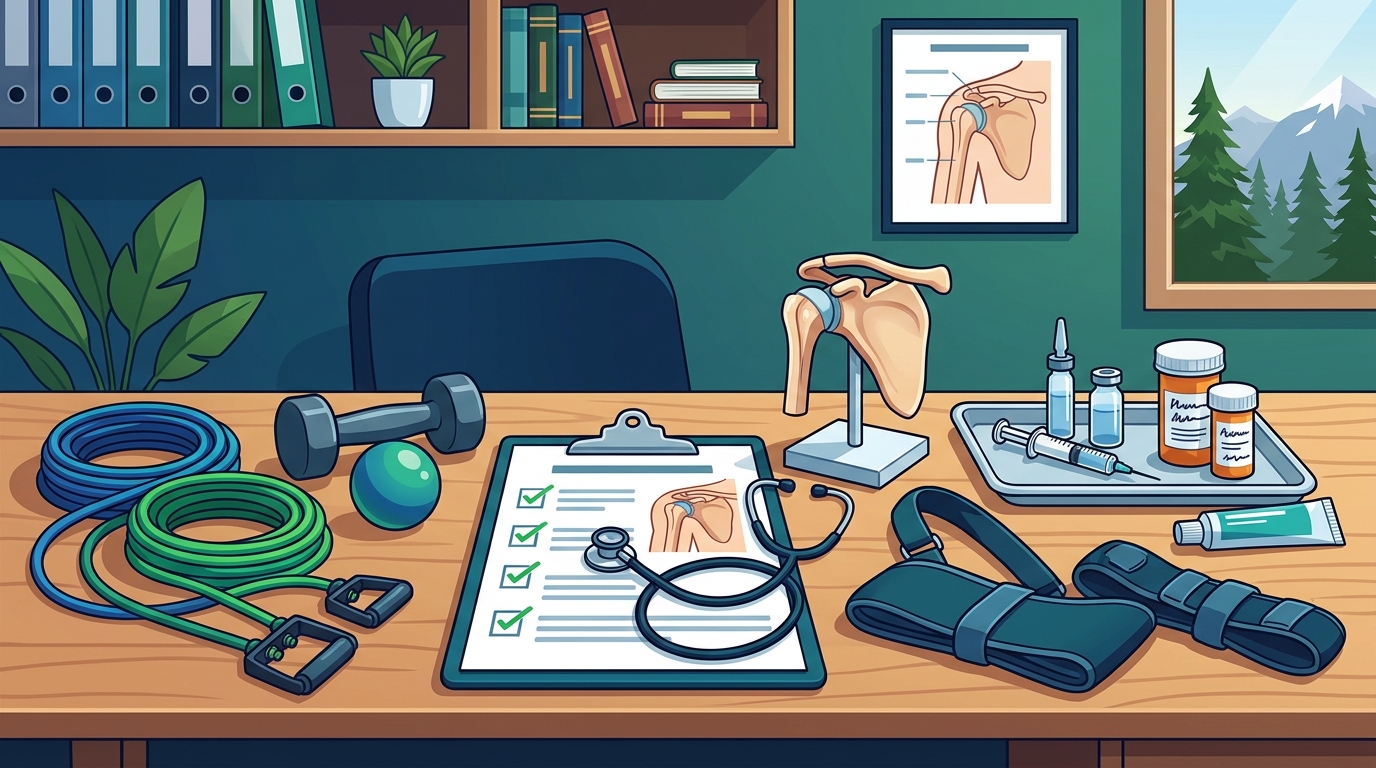
Regenerative and Biologic Therapies
Key Takeaways
- Activity modification is a simple but effective first step in managing shoulder pain.
- Physical therapy focuses on strengthening and restoring range of motion.
- Medications can help control pain and inflammation during the healing process.
- Corticosteroid injections provide short-term relief but should be used judiciously.
- Individualized evaluation is crucial to determine the best treatment plan.
- Conservative care can help many patients avoid surgery or delay it.
Frequently Asked Questions
How long does physical therapy take for shoulder pain?
The duration of physical therapy varies by individual and condition. Most programs last between six and twelve weeks, with sessions two to three times per week. Consistency and adherence to home exercises are critical for success.
Are PRP injections safe for everyone?
PRP is generally considered safe, but it is not appropriate for every patient. Factors such as infection, cancer, or certain medical conditions may contraindicate its use. A thorough evaluation is necessary to determine eligibility.
Can I work while undergoing nonsurgical treatment?
Many patients can continue working, especially if their job does not involve heavy lifting or repetitive overhead motions. Activity modification may be required to prevent aggravating the injury. Your provider can help you develop a plan that balances work demands with healing.
What is the difference between a corticosteroid and PRP injection?
When should I consider surgery if conservative care fails?
Surgery is typically considered when pain and functional limitations persist despite a comprehensive trial of nonsurgical treatments. This decision is made after a detailed evaluation of the underlying pathology and the patient's goals.
Consulting with a Shoulder Specialist
Choosing the right path to recovery requires expert guidance. Dr. Kevin Paisley, a four-time recipient of the Anchorage Press Best Orthopedic Surgeon award, specializes in diagnosing and treating complex shoulder conditions. He provides individualized treatment plans that consider both nonsurgical and surgical options. To discuss your symptoms and explore conservative care options, contact our team for a consultation. Learn more: akshoulder com.