
Deciding Between Self-Care and Professional Evaluation for Shoulder Pain in Anchorage
Shoulder pain affects millions of individuals annually, often stemming from overuse, acute injury, or degenerative changes. According to the American Academy of Orthopaedic Surgeons, shoulder issues are among the most common musculoskeletal complaints requiring medical attention. Ignoring persistent discomfort can lead to chronic instability or permanent tissue damage. This guide helps Anchorage residents determine when home remedies suffice and when expert intervention is necessary.
Understanding Shoulder Anatomy and Pain Triggers
The shoulder joint is the most mobile joint in the human body. This mobility comes at the cost of stability, making it prone to injury. Rotator cuff tendinopathy is a condition where the tendons become inflamed or torn. This is a frequent cause of pain in Anchorage, where outdoor activities like hiking and skiing are popular.
Another common issue is adhesive capsulitis is a condition characterized by stiffness and loss of motion. Often called frozen shoulder, it progresses through stages of freezing, frozen, and thawing. Understanding these conditions helps patients recognize the severity of their symptoms.
Shoulder impingement occurs when tendons are caught between bones. This leads to inflammation and pain during overhead movements. Recognizing the specific type of pain is the first step in choosing the right path for recovery.
When to Try Self-Care First
Not all shoulder pain requires immediate medical intervention. Mild strains from gardening or lifting can often be managed at home. The RICE method is a standard protocol for initial care.
Rest and Activity Modification
Rest involves avoiding activities that aggravate the pain. This does not mean complete immobility but rather avoiding overhead lifting or heavy pushing. According to the Mayo Clinic, rest allows the inflamed tissues to begin healing without further stress.
Ice and Heat Therapy
Ice reduces inflammation in the acute phase. Apply ice packs for 15-20 minutes several times a day. Heat is better for chronic stiffness. It increases blood flow and relaxes tight muscles. Johns Hopkins Medicine notes that temperature therapy is effective for symptom management in non-severe cases.
Over-the-Counter Medication
Non-steroidal anti-inflammatory drugs (NSAIDs) like ibuprofen can help reduce pain and swelling. These should be used as directed and for short durations. They are a bridge to recovery, not a long-term solution.
Red Flags Requiring Immediate Evaluation
Certain symptoms indicate serious underlying issues that self-care cannot address. Ignoring these signs can lead to permanent disability. Acute trauma is a sudden injury resulting from a fall or impact. This often requires imaging to rule out fractures.
Loss of Range of Motion
If you cannot lift your arm or rotate your shoulder, you need professional help. The American Academy of Orthopaedic Surgeons states that significant loss of motion warrants clinical assessment to prevent frozen shoulder progression.
Night Pain and Sleep Disruption
Pain that wakes you up at night is a significant indicator of pathology. It often suggests inflammation that will not resolve with rest alone. Research published in the Journal of Shoulder and Elbow Surgery highlights that night pain is a strong predictor of rotator cuff tears.
Visible Deformity or Swelling
A visible bump or significant swelling indicates structural damage. This could be a dislocation or a severe tear. Immediate evaluation is crucial to restore alignment and function.
The Professional Diagnostic Process
When self-care fails, professional evaluation provides clarity. At AK Shoulder, we utilize advanced diagnostic tools to pinpoint the source of pain.
Physical Examination
A specialist performs specific maneuvers to test strength and stability. These tests help differentiate between tendon, ligament, and joint issues. OrthoInfo provides detailed information on clinical tests for shoulder injuries, emphasizing the importance of physical assessment.
Imaging Studies
X-rays show bone structure and arthritis. MRI scans reveal soft tissue damage like tears. Ultrasound can assess tendons in real-time. The Radiological Society of North America explains that imaging is essential for accurate diagnosis of internal shoulder structures.
Specialized Treatment Plans
Treatment depends on the diagnosis. Options include physical therapy, injections, or surgery. Hospital for Special Surgery outlines that targeted treatment plans improve outcomes significantly compared to generic care.
Comparison of Treatment Paths
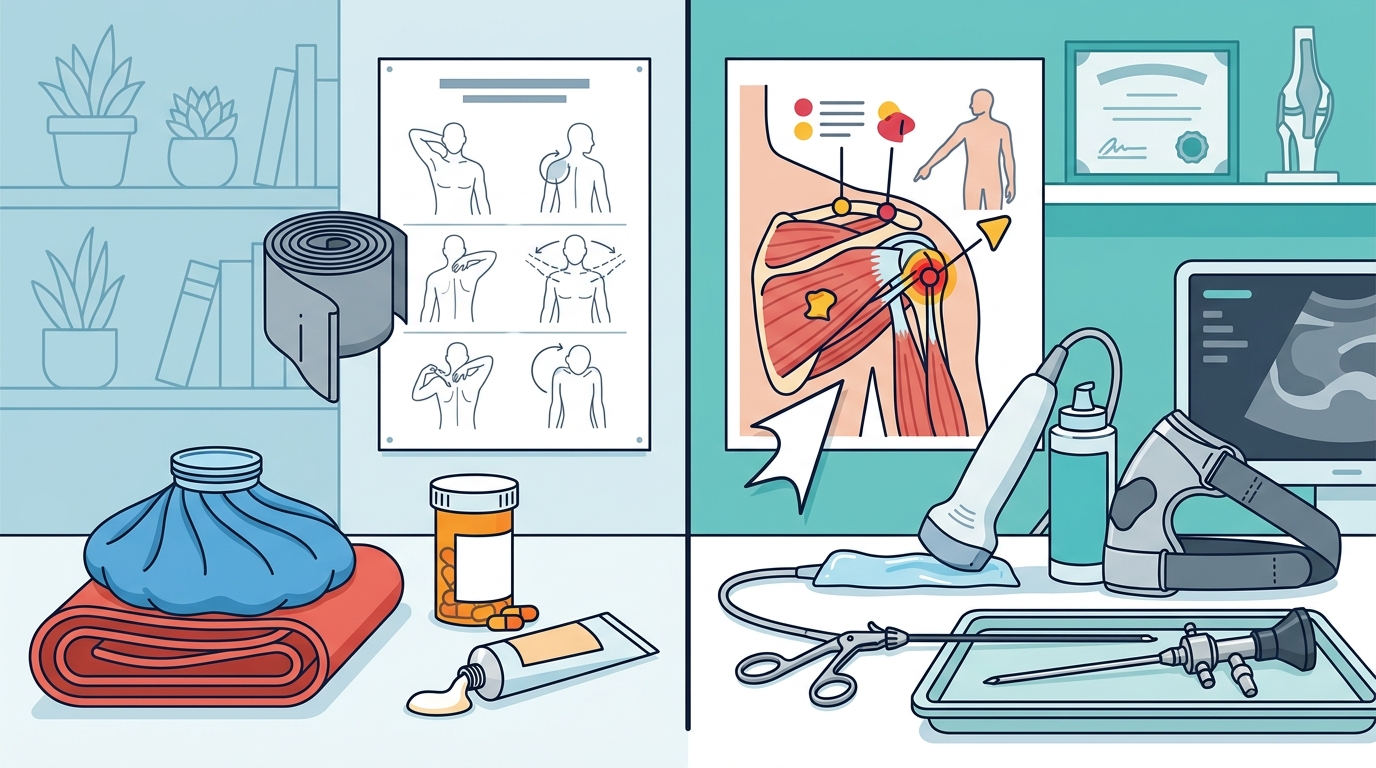
Choosing between self-care and professional evaluation depends on the severity and duration of symptoms. The table below summarizes the key differences.
| Factor | Self-Care Approach | Professional Evaluation |
|---|---|---|
| Best For | Mild strains, recent onset pain | Chronic pain, trauma, loss of motion |
| Cost | Low (OTC meds, ice packs) | Higher (Consultation, imaging, therapy) |
| Time to Relief | Days to weeks | Variable, depends on diagnosis |
| Risk | Masking serious injury | Accurate diagnosis and targeted care |
| Outcome | May not resolve underlying issue | Restored function and long-term health |
Key Takeaways
- Shoulder pain affecting 1 in 6 adults often requires more than rest.
- Self-care is effective for mild, acute strains lasting less than two weeks.
- Night pain is a critical red flag for rotator cuff pathology.
- Professional imaging is necessary to distinguish between bone and soft tissue issues.
- AK Shoulder provides comprehensive diagnostics for Anchorage residents.
- Early evaluation prevents chronic stiffness and permanent disability.
- Physical therapy is often the first line of professional treatment.
Frequently Asked Questions
How long should I try self-care before seeing a doctor?
If pain persists for more than two weeks despite rest and ice, you should seek professional evaluation. WebMD suggests that persistent pain warrants medical attention to prevent worsening conditions.
Can shoulder pain go away on its own?
Mild strains often resolve with self-care. However, tears and arthritis typically do not heal without intervention. Mayo Clinic notes that some conditions are self-limiting while others require treatment.
What is the difference between a strain and a tear?
A strain is a stretch or minor tear of muscle or tendon. A tear is a complete rupture of tissue. Johns Hopkins Medicine explains that tears often require surgical or intensive therapy.
Is physical therapy necessary for shoulder pain?
Physical therapy is crucial for restoring strength and mobility. It is often prescribed after evaluation. The AAOS highlights physical therapy as a cornerstone of shoulder rehabilitation.
When is surgery required for shoulder pain?
Surgery is considered when conservative treatments fail. It is common for severe tears or instability. Hospital for Special Surgery details criteria for shoulder surgery.
How does Anchorage weather affect shoulder pain?
Cold and damp weather can increase stiffness and pain. Studies in the Journal of Rheumatology indicate that weather changes can exacerbate joint pain.
What services does AK Shoulder offer?
AK Shoulder offers diagnostics, therapy, and surgical consultation. Visit our services page for detailed information on our offerings.
Contact AK Shoulder
Do not let shoulder pain limit your life in Anchorage. If self-care has not provided relief, schedule an evaluation with our specialists. We provide expert care tailored to your needs. Contact AK Shoulder today to book your appointment and start your journey to recovery.