Shoulder Replacement vs. Repair: Which Procedure Is Right for You?
Chronic shoulder pain can severely limit your ability to perform daily tasks, from lifting groceries to sleeping comfortably. According to the American Academy of Orthopaedic Surgeons, shoulder arthritis affects millions of adults, with conservative treatments failing to provide long-term relief for many patients. When physical therapy and medications no longer work, surgical intervention becomes necessary. However, the path forward is not always clear. The two primary surgical options are shoulder repair and shoulder replacement. Understanding the fundamental differences between these procedures is critical for making an informed decision about your health. This guide breaks down the indications, recovery timelines, and long-term outcomes for each approach.
Understanding the Core Differences
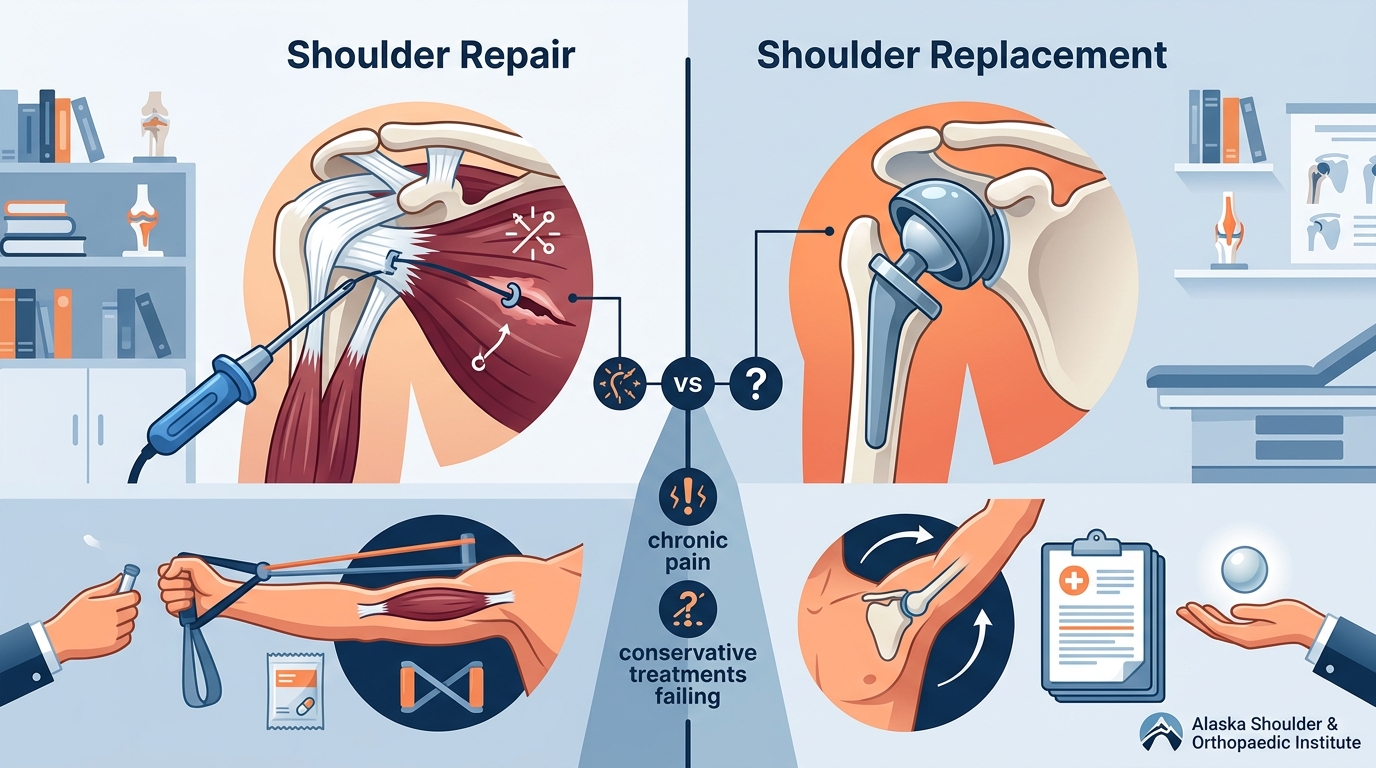
Before diving into the specifics, it is essential to define the anatomical and procedural distinctions between these two surgeries. Shoulder repair focuses on restoring the natural anatomy of the joint, while shoulder replacement involves substituting damaged structures with artificial components.
Rotator Cuff Repair is a surgical procedure that reattaches torn tendons to the humerus bone. This approach aims to restore the natural mechanics of the shoulder, preserving the patient's own bone and cartilage. It is typically reserved for patients with intact joint surfaces but damaged soft tissue.
Shoulder Arthroplasty, commonly known as shoulder replacement, is a surgical procedure that replaces the damaged joint surfaces with artificial implants. This can involve replacing just the ball (hemiarthroplasty) or both the ball and socket (total shoulder arthroplasty). This approach is designed for patients with severe arthritis or extensive bone loss where the natural joint cannot be salvaged.
The choice between these two procedures hinges on the integrity of the joint surface. If the cartilage is healthy, repair is preferred. If the cartilage is worn away, replacement becomes the viable option. At AK Shoulder, we utilize advanced diagnostic imaging to determine the precise state of your joint before recommending a course of action.
When Shoulder Repair Is the Best Option
Shoulder repair is generally indicated for patients who have suffered a rotator cuff tear but still have healthy joint surfaces. The rotator cuff is a group of muscles and tendons that stabilize the shoulder and allow for a wide range of motion. When these tendons tear, pain and weakness result.
Acute Tears vs. Chronic Degeneration
Acute tears often result from a specific injury, such as a fall or lifting a heavy object. These tears can often be repaired successfully with minimal tissue loss. In contrast, chronic degeneration occurs over time due to wear and tear. While chronic tears can also be repaired, the success rate may depend on the quality of the remaining tendon tissue.
Preserving Natural Anatomy
The primary advantage of shoulder repair is the preservation of natural anatomy. By reattaching the tendons, patients retain their own bone and cartilage. This can lead to a more natural feel in the shoulder and potentially longer-lasting results for younger, more active patients. Data shows that younger patients who undergo successful repair often return to high-impact activities more readily than those who undergo replacement.
For more details on rotator cuff conditions, you can read our comprehensive guide on rotator cuff tear symptoms.
When Shoulder Replacement Is Necessary
Shoulder replacement is typically recommended for patients with severe osteoarthritis, rheumatoid arthritis, or complex fractures that cannot be fixed with repair. When the cartilage that cushions the bones wears away, the bones rub against each other, causing pain and stiffness.
Severe Arthritis and Bone Loss
If imaging reveals significant bone loss or severe arthritis, repair is no longer a viable option. In these cases, the joint surfaces must be replaced to restore function and alleviate pain. Total shoulder arthroplasty is the gold standard for patients with intact rotator cuffs and severe arthritis.
Reverse Shoulder Arthroplasty
For patients with massive, irreparable rotator cuff tears combined with arthritis, reverse shoulder arthroplasty may be necessary. This procedure reverses the ball-and-socket mechanism, allowing the deltoid muscle to take over the work of the rotator cuff. This innovation has revolutionized treatment for complex shoulder cases. According to recent orthopedic studies, reverse shoulder arthroplasty provides significant pain relief and functional improvement in patients with cuff tear arthropathy.
Learn more about reverse shoulder replacement procedures and how they differ from traditional replacements.
Recovery Timelines and Rehabilitation
Recovery is a critical factor in choosing between shoulder repair and replacement. The rehabilitation protocols for each procedure differ significantly in terms of duration and intensity.
Shoulder Repair Recovery
Recovery from shoulder repair is a gradual process. Initially, the arm is immobilized in a sling to protect the repaired tendons. Passive range of motion exercises begin within the first few weeks. Active motion typically starts after six weeks. Full recovery and return to sports can take six to twelve months. Patience is essential during this phase to prevent re-tearing the repaired tissue.
Shoulder Replacement Recovery
Recovery from shoulder replacement is often faster in the initial phases. Pain relief is usually immediate or occurs within the first few weeks. Patients can begin active motion exercises earlier than with repair. Most patients return to normal daily activities within six to eight weeks. However, heavy lifting and high-impact activities may be restricted indefinitely to protect the implant.
For a detailed breakdown of post-operative care, visit our post-operative care guidelines.
Pros and Cons of Each Approach
Choosing the right surgery involves weighing the benefits and risks of each option. The following table summarizes the key differences to help you discuss these points with your surgeon.
| Feature | Shoulder Repair | Shoulder Replacement |
|---|---|---|
| Primary Goal | Restore natural anatomy and tendon function | Replace damaged joint surfaces to relieve pain |
| Best For | Rotator cuff tears with healthy cartilage | Severe arthritis or bone loss |
| Recovery Time | 6 to 12 months for full strength | 6 to 8 weeks for daily activities |
| Implant Longevity | N/A (uses patient's own tissue) | 15 to 20+ years typically |
| Activity Restrictions | Gradual return to high-impact sports | Permanent restriction on heavy lifting |
Understanding these distinctions is vital. For instance, a young athlete with a rotator cuff tear should prioritize repair to maintain high-level function. Conversely, an older adult with severe arthritis may benefit more from the immediate pain relief of replacement. You can explore our about our surgical philosophy to understand our patient-centered approach.
Key Takeaways
- Anatomical Integrity: Shoulder repair is only viable if the joint cartilage is healthy. If arthritis is present, replacement is likely necessary.
- Recovery Speed: Shoulder replacement generally offers faster initial pain relief and functional recovery compared to the prolonged rehabilitation of repair.
- Activity Level: Younger, active patients often prefer repair to preserve natural mechanics, while older patients may prioritize the durability and pain relief of replacement.
- Reverse Arthroplasty: This specific type of replacement is crucial for patients with massive, irreparable rotator cuff tears combined with arthritis.
- Implant Lifespan: Shoulder replacements typically last 15 to 20 years, making them a long-term solution for degenerative conditions.
- Diagnostic Accuracy: Advanced imaging, such as MRI and CT scans, is essential for determining the correct surgical path. Consult AK Shoulder for precise diagnostics.
- Rehabilitation Importance: Successful outcomes for both procedures depend heavily on strict adherence to post-operative physical therapy protocols.
Frequently Asked Questions
How do I know if I need a repair or a replacement?
The decision depends on the condition of your joint cartilage and the integrity of your rotator cuff. If your cartilage is healthy, repair is preferred. If you have severe arthritis, replacement is necessary. A detailed MRI and physical exam by an orthopedic specialist will determine the best option.
Which procedure has a faster recovery time?
Shoulder replacement typically has a faster initial recovery. Patients often experience significant pain relief within weeks and can resume daily activities sooner. Shoulder repair requires a longer period of immobilization and gradual strengthening, taking up to a year for full recovery.
Can a shoulder repair be converted to a replacement later?
Yes, if a shoulder repair fails or if arthritis develops later in life, a conversion to shoulder replacement is possible. However, revision surgeries are more complex and have a longer recovery time than primary procedures.
What is the success rate for shoulder repair?
Modern arthroscopic shoulder repair has high success rates, with most patients experiencing significant pain relief and restored function. Success depends on the size of the tear, the quality of the tissue, and adherence to rehabilitation.
How long does a shoulder replacement last?
Most shoulder replacements last 15 to 20 years or longer. Factors such as age, activity level, and weight can influence the longevity of the implant. Advances in materials and surgical techniques continue to improve durability.
Is reverse shoulder replacement painful?
Pain is managed effectively with modern anesthesia and post-operative pain control protocols. Most patients report significant pain relief after the initial healing period. The procedure is specifically designed to alleviate pain caused by cuff tear arthropathy.
What are the risks of shoulder surgery?
All surgeries carry risks, including infection, nerve injury, and stiffness. However, these risks are relatively low in experienced hands. Discussing your specific risk factors with your surgeon is crucial for informed consent.
Schedule Your Consultation
Choosing between shoulder repair and replacement is a significant decision that impacts your quality of life. At AK Shoulder, we provide expert care tailored to your unique anatomy and lifestyle goals. Our team uses the latest diagnostic tools to ensure you receive the most appropriate treatment. Do not let shoulder pain dictate your life any longer. Contact us today to schedule a consultation and take the first step toward a pain-free future. Visit our contact page to book your appointment.